
Ghee vs. Cooking Oil: Which is Better for Indian Cooking?
Ghee, a staple in most Indian kitchens, is extremely rich and aromatic. In fact, its use cases extend beyond the kitchen due to its nourishing properties. You can either purchase it from a grocery app or make it at home.
Most cooking oils, such as the Saffola Tasty Oil, in contrast, are majorly refined. They also go through heavy processing post-extraction. You can alternatively go for cold-pressed oils, too.
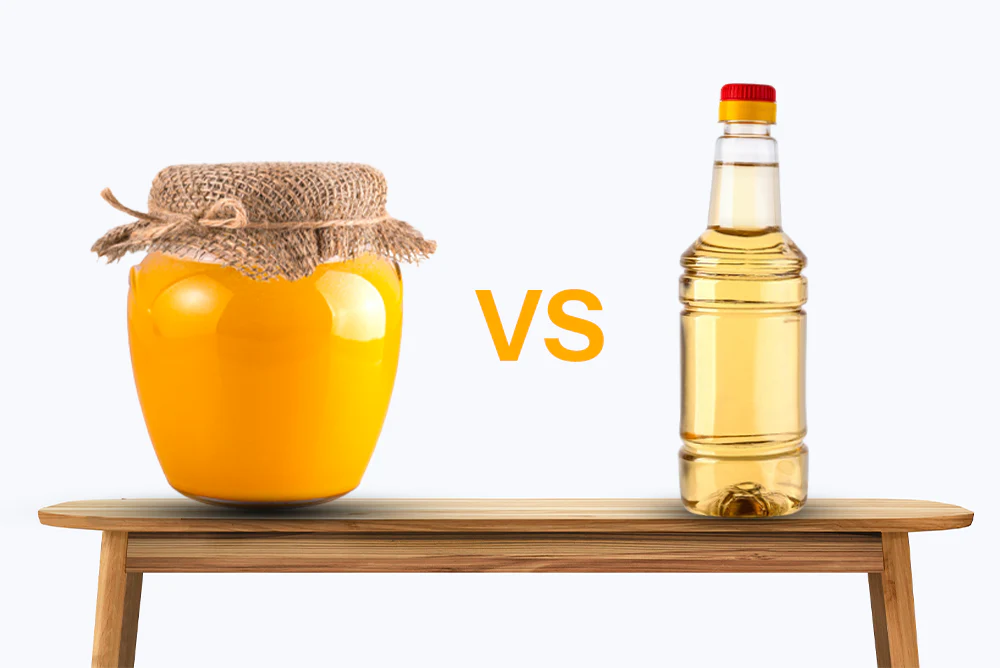
Read on as we compare ghee and regular cooking oil for Indian cooking. We’ll analyse their nutritional aspects, health implications, as well as uses.
Nutritional Aspects of Ghee and Cooking Oil
We’ve highlighted the differences in their nutritional profiles below:
Ghee
Ghee has been a part of our culture for ages, and for good reason! Here are some noteworthy nutritional aspects of ghee. You can get it from any grocery app:
- No Lactose: Yes, if you’re lactose intolerant, you can have ghee. The clarification process ends up eliminating lactose.
- Plenty of Vitamins: Vitamins A, D, E, and K constitute only a fraction of what it offers. Just know that you get stronger bones and better immunity.
- Healthy Fats: It supplies your body with Omega-3 fatty acids for better brain and heart health.
Cooking Oil
High-quality cooking oils like the Saffola Tasty Oil have a lot to offer. Just make sure you pick the right oils from a trustworthy grocery app. When consumed in moderation, they have some nutritional value to offer:
- Fats: If you use cold-pressed oils like olive oil, you’ll get a great deal of monounsaturated fats into your body. It’s great for your cholesterol levels.
Meanwhile, with other oils like sunflower oil, you attain polyunsaturated fats. Steer clear of saturated fats, though, as they contribute to your bad cholesterol.
- Omega-6: The vegetable oils in your pantry have these fatty acids. We advise that you consume them in moderation as it can cause inflammation if you disturb the ratio of Omega-6 with Omega-3.
Impact on Health
Here are the multiple health benefits if you consume ghee vs cooking oil. Remember, the key is to avoid over-consumption.
Ghee
- Better digestion with healthy intestinal walls.
- Can help you deal with inflammation.
- Efficient energy booster.
- Smooth skin and shiny locks.
Cooking Oil
- Antioxidant-rich due to monounsaturated fats.
- Anti-inflammatory with Omega-3 fatty acids (cold-pressed).
Cooking Applications
Owing to their unique qualities, you can use ghee and cooking oil in diverse ways. Here are some popular cooking applications for you:
Ghee
Ghee, fortunately, has a high smoke point and is nutritious. You can use it for:
- Deep frying
- Sauteing
- Traditional recipes, thus adding a nutty, rich flavour
Cooking Oil
The refined oils like Saffola Tasty Oil in your pantry have a high smoke point. You can use them for deep frying and grilling.
On the other hand, virgin oils retain their nutritional aspects but give you a low smoke point. Thus, you can add them to your salad dressings and smoothies.
Conclusion
Clearly, both ghee as well as most cooking oils are a part of our Indian culinary experience. It’s only a matter of picking the best alternative for your taste buds and recipes.
Moreover, you must ensure that the quality of the oil and ghee is excellent. Go for a reliable grocery app like the Swiggy Instamart and pick renowned brands.

Jessica
Jessica is a Founder and Editor of InvestmentCage, A Business & Finance Magazine. She is a MBA graduate in Business Studies, loves to write articles on Business, Insurance and Investment topics.